A homeowners worst nightmare is often a plumbing issue that will damage your home or interrupt your daily routine. A leaking toilet can do both if not addressed quickly. Imagine not being able to flush your toilet properly or paying thousands more yearly for wasted water.
While leaking toilets are one of the more common residential plumbing issues, they’re often overlooked by many homeowners. Do you remember the last time you inspected the tank behind your toilet? If the answer is no, it may be time to take a look.
Like any appliance in your home, your toilet can be susceptible to deterioration with age. Without any upkeep or maintenance, you could be quickly looking at a major plumbing emergency. So what can you do to start? Read on to learn a bit about the nuances of toilet leaks.
Inspect Your Toilet Flapper Regularly
Your toilet flapper is key to the flushing process. When you push your lever down, the flapper opens, allowing water to flow through and remove waste from the bowl. When it’s done, it seals the inlet pipe again, letting your toilet refill for the next use.
Unfortunately, toilet flappers are made from rubber or plastic. This makes them more susceptible to deterioration, which is why it’s always a good idea to perform regular inspections. Be on the lookout for:
 Warping
- Cracks
- Worn seals
- Grime buildup
- Discoloration
- Rusted chains
 Warping
The toilet flapper is one of the most commonly replaced components of your toilet. Because of this, they can easily be found at your local hardware store or your plumbing contractor will have one in stock.
Toilet flushing assemblies also come in various shapes and sizes, so be sure you know what system you have before your start dissembling anything.
Avoiding The Common Causes For Running Toilets
 Outside of the toilet flapper, other issues can cause toilet leaks as well. Many homeowners put tablets in their toilet to help with cleaning and odor control.
In some instances, those tablets have been known to become obstructions for your flapper.
If they go the wrong way in your toilet, you can easily be looking at the need for plumbing replacement. Another common issue is deterioration. Like any appliance or fixture in your home, your toilet will suffer from wear and tear overt time.
Some of the more susceptible components are seals and fittings. While some leaks are large and will be noticed quickly, other leaks are much smaller and can go unnoticed for some time. These are the dangerous leaks that lead to mold growth and property damage.
The Benefits of Regular Maintenance
 The best way to keep your home and family safe is with regular toilet maintenance. This can be as complex as replacing the entire assembly or as simple as performing a visual inspection of your toilet flapper.
At PAC Plumbing, Heating, Air we offer detailed inspections and toilet support to keep your system in good working order. We can also respond to emergency repair issues and help with long-term solutions.
Our goal is to not only fix your problems but educate you too. A helpful tip for your toilet? Be sure to check your monthly water bill. Any variation in water usage can stem from a leaking toilet.
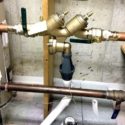
 “Backflow” occurs when wastewater in your plumbing flows backward, into your home, and blends with the home’s clean water supply. This can present serious health risks to occupants who consume from the water supply.
  Contaminated water and clean water should never meet! Each should always flow through separate pipes. The best way to prevent this type of backflow with an air gap.
 Another backflow prevention device, called pressure vacuum breakers, will shield against water backflow. They are instrumental in irrigation systems, used to prevent non-drinking water from inadvertently entering the clean water supply by way of an irrigation system.
 The backflow prevention device that you buy depends largely on your plumbing system and sewer line. Pressure vacuum breakers can be used in homes to restrict backflow as a result of a vacuum force in the pipeline. PVBs will send air into a pipe to stop the absorption.